
At a recent AI meeting, the communications agency Make Sense team shared their expertise on Generative Engine Optimization (GEO). This term is gaining increasing relevance amid the growing popularity of generative search engines like ChatGPT, Perplexity, Gemini, Claude, and many others. Although clients are not yet familiar with this term, the significant focus on GEO underscores the importance of adapting to the current landscape.
What Is GEO?
Generative Engine Optimization (GEO) represents the practice of curating and structuring content specifically for consumption by artificial intelligence systems. Its fundamental distinction from traditional Search Engine Optimization (SEO) lies in its primary objective: whereas SEO aims to secure a high ranking on a search engine results page to drive click-through traffic, GEO is designed to have content seamlessly integrated into the AI's generated response directly within its interface. The goal is not a site visit, but to be cited as an authoritative source in the AI's synthesized answer.
To illustrate, when a user queries a generative AI like ChatGPT with, "What are the top project management tools for remote teams?", the system scours and analyzes credible sources to construct a comprehensive response. Effective GEO ensures a brand's product is prominently featured and contextualized within that generated summary.
While GEO is a powerful channel for enhancing brand visibility and establishing topical authority, its conversion pathway differs from SEO. It currently drives less direct traffic but offers immense value in brand recognition and trust-building within AI ecosystems. Neglecting GEO poses a significant strategic risk; as generative AI becomes a primary interface for information discovery, brands that are absent from these conversations forfeit access to a rapidly expanding user base.
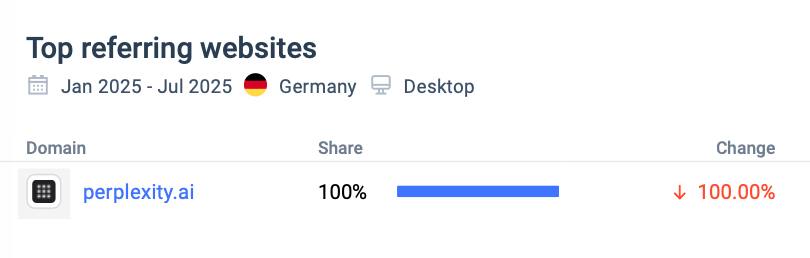
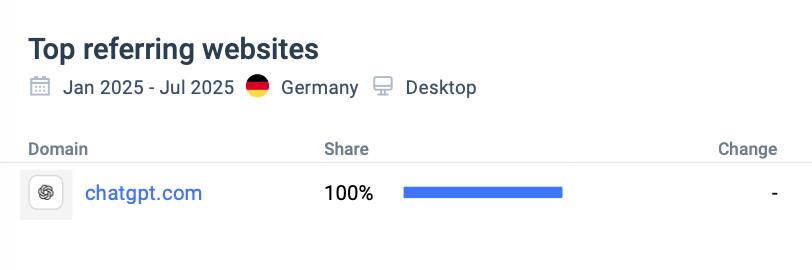
This paradigm shift is already measurable. For instance, while crafting a marketing strategy for a client, a traffic analysis via Similarweb revealed a notable share of their referrals originated from ChatGPT. And also key competitors were gaining traction through Perplexity AI. This data underscores a new reality in the user's journey: a landscape we are already equipped to navigate effectively.
Specialized GEO Tools:
- AI Monitor: platform delivers real-time analytics on content performance within AI-generated responses, complemented by strategic recommendations for generative optimization.
- ZipTie: a highly customizable, open-source solution engineered to track brand and entity citations across generative AI outputs, enabling tailored monitoring workflows.
- Otterly.AI: specializing in brand visibility, this tool meticulously tracks mentions and citations across conversational AI platforms, providing granular analytical insights.
The Core Principles of GEO:
- Content Quality and Credibility: generative models inherently prioritize reliable and well-sourced information, making the production of accurate, substantiated content paramount.
- Comprehensive Contextual Depth: AI systems exhibit a strong preference for exhaustive topic coverage, where the breadth and depth of content directly influence its likelihood of being cited.
- Structural Clarity: the implementation of clear hierarchies, delineated through headings, lists, and tables, significantly enhances machine parsing and the accurate extraction of key information.
- Query-Centric Design: content must be architected to provide direct, unambiguous answers to prevalent user inquiries, thereby increasing its relevance for integration into generative outputs.
- Reputation Management: maintaining vigilance over how a brand is referenced across diverse sources is critical for safeguarding its perceived authority and integrity.
- Multimodal Optimization: as generative intelligence extends across text, image, and video modalities, effective optimization strategies must be holistically inclusive of all formats.
- E-E-A-T (experience, expertise, authoritativeness, trust): this framework remains key for AI models aiming to deliver credible and trustworthy results.
- Continuous Analysis and Adaptation: regularly tracking how your content is used in generative answers and refining your strategy ensures ongoing competitiveness.
Artificial intelligence is becoming a driver of market transformation. To remain competitive, businesses must start integrating AI-powered tools into their operations today not just to follow trends, but to create them.
Make Sense in every message